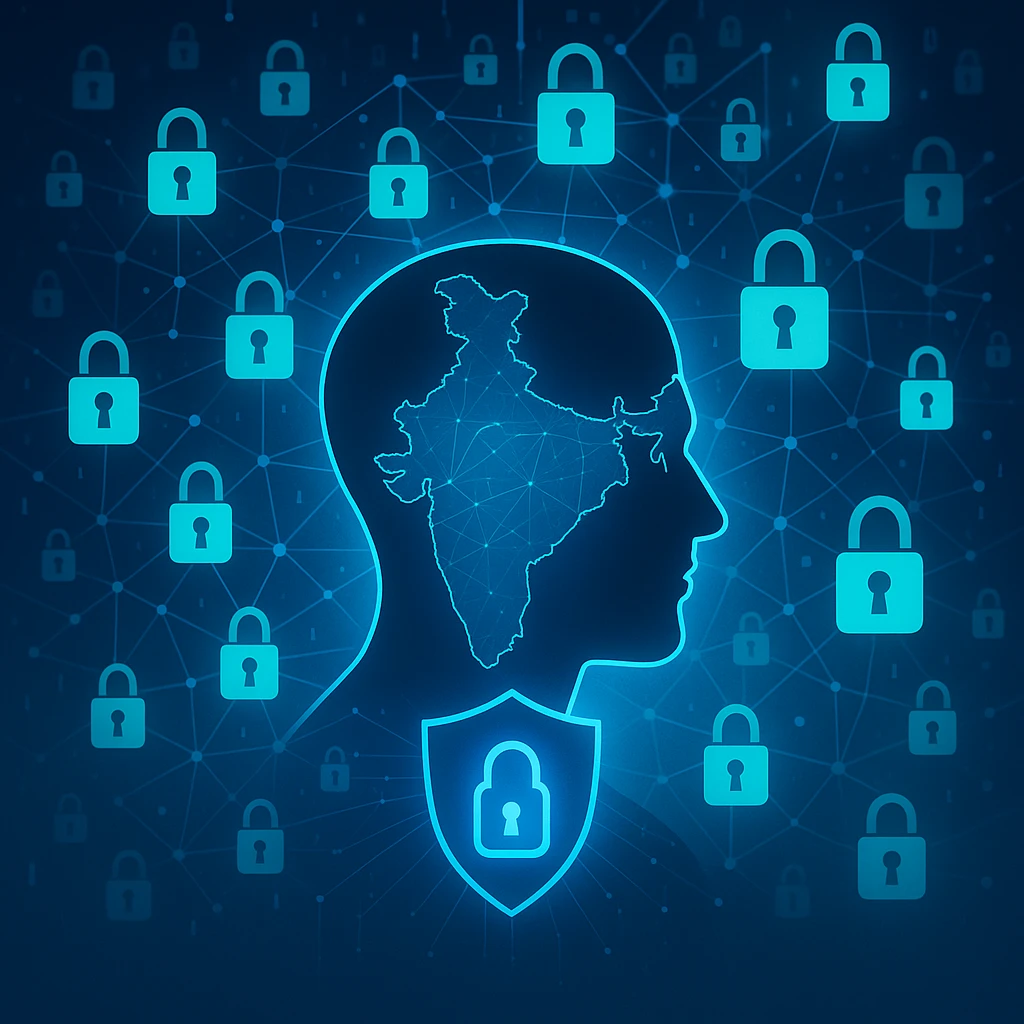
Protecting critical infrastructure from state-sponsored attacks is no longer a security concern but the core of national resilience, economic stability, and public safety. As digitalization and interconnected systems expand their capabilities, they equally increase the exposure to risk. State-sponsored attackers recognize this and are heavily investing on sophisticated cyber operations designed to disrupt power grids, hospital networks, transportation systems and telecom networks. Unlike typical cybercriminals, they differ in both intent and capability. These actors are well funded, highly skilled and often operate with geopolitical objectives. Their goal is not just disruption but to have influence over essential systems, create pressure and at times gaining strategic advantage. This makes such attacks fundamentally different and far more dangerous in today’s threat landscape.

Vice President – International Sales
Array Networks
From Breaches to Disruption
Traditional cybersecurity thinking has focused on preventing breaches. But in critical infrastructure, the real risk begins after access is gained.
State-backed threat groups are designed for persistence. They move slowly, remain undetected for long periods and often position themselves deep within systems before taking action. The goal is not just entry, but control. Unlike opportunistic attacks, these operations frequently target industrial control systems, the backbone of critical infrastructure.
According to IBM’s Cost of a Data Breach Report 2023, the average breach cost in critical infrastructure sectors stands at $4.73 million, higher than the global average. But the financial impact tells only part of the story. In these sectors, the real damage is operational.
When systems fail, resulting in disruption of essential services, the consequences escalate quickly.
Identical Threats, Varied Consequences
While the nature of impact varies across sectors, but the underlying vulnerability remains the same.
- In the energy sector, attackers increasingly target operational technology. A successful intrusion can move beyond IT systems into control environments, affecting power generation and distribution. The cyberattacks on Ukraine’s power grid remain a clear example of how digital access can translate into physical disruption.
- In healthcare, the margin for error is almost zero. A ransomware attack does not just lock files—it delays surgeries, disrupts diagnostics and forces hospitals to divert patients. In such cases, downtime becomes a direct risk to patient safety.
- The telecom sector is both a target and an enabler. Compromising telecom networks can disrupt communication at scale while also providing attackers with surveillance capabilities. This dual risk makes telecom infrastructure especially sensitive.
- In transportation, increasing reliance on digital systems right from airline operations to smart traffic control has improved efficiency but introduced new dependencies. A single disruption can ripple across cities and supply chains.
Across all these sectors, a consistent pattern remains: the attack surface has expanded faster than the security posture can keep up.
Where Traditional Security Falls Behind
Many critical infrastructure systems were built for reliability, not security. Legacy environments, especially in energy and transport, are difficult to update without affecting operations. This creates long-standing vulnerabilities.
At the same time, the convergence of IT and OT networks has blurred boundaries. Systems that were once isolated are now connected, often without adequate segmentation. This gives attackers a pathway to move from less critical systems to high-value targets.Third-party vendors and software dependencies introduce hidden risks with the shortage of specialized cybersecurity talent further hampers proactive defense.
Perimeter-based security models struggle in this environment. State-sponsored attackers rarely rely on brute force. They exploit legitimate credentials, use trusted tools and blend into normal activity. By the time they are detected, they often penetrate inside the network.
Rethinking Defense: From Protection to Resilience
Protecting critical infrastructure requires a more realistic approach than the one that assumes breaches will happen and focuses on limiting impact.
The first step is visibility. Organizations must have a clear, real-time understanding of both IT and OT environments. Without this, even advanced security tools operate with blind spots. Here are some of the intelligence-driven approach to adopt:
Segmentation is equally important. Separating critical systems from general networks ensures that even if an attacker gains entry, their movement is restricted. This simple control can significantly reduce the scale of an incident.
Continuous monitoring and threat intelligence add another layer. State-sponsored attacks are rarely sudden; they develop over time. Early detection of anomalies can prevent escalation.
Zero Trust Architecture: Adopting Zero Trust Architecture imposes security at all access points,ensures that no user or system is implicitly trusted. It works on the model of continuous verification, least-privilege access, and micro-segmentation reduce lateral movement within networks proactively prevents threats.
Secure Application Delivery: Application delivery controllers (ADCs) and security gateways play a critical role and a strategic point of control in protecting infrastructure-facing applications. Advanced traffic inspection, encryption, and anomaly detection help mitigate sophisticated attack vectors ensuring applications operate in their powerband.
Supply Chain Security: Rigorous cyber security practices of vendor assessments, code integrity checks, and software bill of materials (SBOM) can help reduce exposure from third-party risks.
But perhaps the most overlooked element is recovery readiness. In critical infrastructure, the question is not just how to stop an attack, but how quickly operations can be restored. Regular incident response plans, cyber drills, and redundancy strategies and clear decision-making processes are most essential.
The Real Measure of Security
For critical infrastructure, security cannot be measured only by how many attacks are blocked. A more meaningful measure is: Can the organization continue to function under attack?
This is where cyber resilience becomes critical. It shifts the focus from avoiding disruption entirely to managing it effectively.
The Role of Public-Private Collaboration
It is not possible for a single entity to tackle state-sponsored threats alone. Governments, private enterprises, and technology providers must collaborate closely. Frameworks from organizations like National Institute of Standards and Technology (NIST) and global information-sharing alliances provide valuable guidance, but their effectiveness depends on widespread adoption and real-time cooperation.
In countries like India, it is critical to promote initiatives on domestic innovation and secure manufacturing ecosystems. Building indigenous cybersecurity capabilities not only reduces dependency but also strengthens our national defense against external threats.
Conclusion: When the Stakes Are High, Recovery Defines Readiness
State-sponsored attacks are designed to exploit not just technical gaps, but operational dependencies. In sectors like energy, healthcare, telecom and transportation, those dependencies are deep and unavoidable.
This is why security strategies must evolve beyond prevention. Strong defenses remain essential, but they are only part of the solution.
The question is no longer whether critical infrastructure will be targeted, but how prepared organizations are to withstand and recover from such attacks. Leadership teams must treat cybersecurity as a board-level priority, embedding resilience into every layer of their operations.
Protecting critical infrastructure, is not just about resilience; it is about ensuring that even in the face of disruption the system does not fail when it matters most.It is ultimately about safeguarding society itself. In an era of persistent geopolitical tension, proactive defense, continuous innovation, and collective vigilance are the only sustainable paths forward.
–Authored by Shibu Paul, Vice President – International Sales at Array Networks