
Most enterprises can point to an AI pilot that worked. Far fewer can point to one that changed how the business actually runs. That gap between proving an idea and absorbing it at scale sits at the centre of this conversation with Saurabh, Chief Operating Officer at TO THE NEW. He argues that AI ROI conversations often get stuck measuring model accuracy instead of business outcomes, that pilots fail to scale not because the technology breaks but because the operating model around it never changes, and that cloud maturity is now entering a third, autonomous phase. In this interview, he unpacks what future-readiness really means, why build-versus-buy is the wrong question in 2026, and why engineering velocity, not model sophistication, will separate market leaders from the rest.
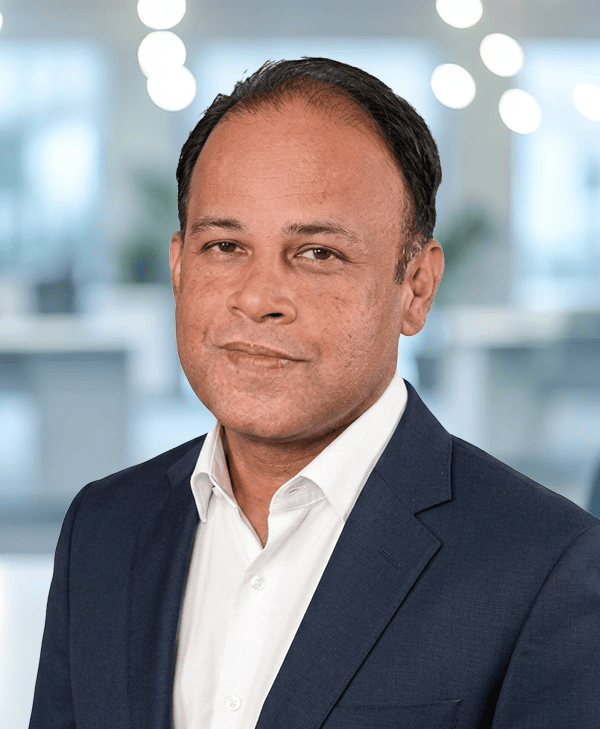
CISO Forum: Enterprises have poured budgets into AI over the last couple of years, but ROI conversations remain murky. How should organisations actually be measuring the business value of their AI investments?
Saurabh: Many organisations measure AI in the language of the model rather than the language of the business. They look at model accuracy, adoption numbers, or how many people are using a tool, and sometimes declare success. But those are signals of activity, not necessarily signals of value.
The first step should be to establish a clear business baseline before starting the AI initiative. What problem are we trying to solve? Is the objective to reduce cost, increase revenue, improve productivity, or reduce risk? Pick the outcome and measure it.
For example, we had a client using AI for demand forecasting. They were closely tracking forecast accuracy, which made sense from a technology perspective. But the bigger business question was whether better forecasting was helping them hold less inventory and free up working capital. That told us much more about whether the investment was actually creating value.
Another piece is often overlooked: the full cost of AI. Infrastructure, model costs, integration, maintenance, governance, and change management all need to be factored in.
So I would frame the question differently. Instead of asking, “What is the ROI of AI?”, ask, “Which business outcome are we improving, by how much, and at what cost?” That is where the real ROI conversation begins.
CISO Forum: As COO, where do you see the biggest gap between AI pilots that generate internal buzz and AI initiatives that actually move the needle on revenue or efficiency?
Saurabh: The biggest gap is usually not the AI model. It is the distance between proving that something can work and making it work inside the business.
A pilot can prove that the technology works. Production is a different world. That’s where you find out whether the organisation can actually live with it, scale it and get value from it.
At TO THE NEW, we often see the technical feasibility of an AI use case established quite quickly. The harder part starts when you have to integrate it with the realities of an enterprise: its data, applications, security, workflows, governance and economics.
That’s where enterprises need to start thinking about an AI operating system for engineering and software delivery. You can’t scale AI by simply giving developers access to a few AI tools. You need to rethink how software gets built, the tools and platforms, engineering workflows, roles and skills, governance, context and knowledge, and how AI agents work across the delivery lifecycle.
This becomes the foundation for moving from individual AI experiments to AI-enabled engineering at scale. It lets teams build faster and more efficiently while maintaining the quality, security, and controls enterprises need.
That’s why every serious AI initiative should have a path to production from day one. You need a business owner, clear success metrics and, importantly, the operating system and capabilities required to make AI part of how the organisation actually works.
The real measure of AI maturity isn’t how many pilots an organisation has run. It’s how effectively it has embedded AI into how it engineers, operates, and delivers, and turned successful experiments into repeatable business capabilities.
CISO Forum: Innovation and operational efficiency often pull in different directions; one demands experimentation, the other demands discipline. How do you help enterprises balance the two without one cannibalising the other?
Saurabh: I don’t see innovation and operational efficiency as opposing priorities. In fact, they should be symbiotic.
Think about it like an R&D lab and a manufacturing plant. The lab needs freedom to experiment, fail quickly and try new things. The manufacturing plant needs discipline, consistency, quality and efficiency. You wouldn’t run the lab like a factory, but you also wouldn’t run the factory like a lab.
That’s how enterprises should approach innovation. Early-stage experiments should have lightweight governance, limited investment and a clear hypothesis. Once something starts showing real potential, you progressively add discipline around architecture, security, economics, reliability, and measurable business outcomes.
There is also an important cultural distinction: encourage experimentation, but engineer production.
This is particularly relevant with AI. The cost of experimentation has fallen dramatically, so enterprises should experiment more. But they also need a clear mechanism to identify what works, scale it and make it part of the operating model.
The goal is to move fast at the front end and scale selectively at the back end. That’s where innovation and operational efficiency become symbiotic: innovation creates new possibilities, and operational discipline turns the best of those possibilities into repeatable business value.
The strongest enterprises won’t just innovate more. They’ll get better at turning innovation into scalable, efficient business capabilities.
CISO Forum: Cloud adoption is now table stakes for most enterprises. What’s the next phase of cloud maturity that businesses need to get right to unlock real transformation value?
Saurabh: Cloud maturity has evolved through three distinct phases.
The first phase was migration. The question was: How much of our workload can we move to the cloud? Enterprises were focused on getting out of the data centre, moving workloads, modernising applications and building the basic cloud foundation. That was necessary, but it was largely a technology-led exercise.
The second phase is about business value and economics. The question has shifted from “How much have we migrated?” to “What business advantage are we getting from being on the cloud?” Is it making us faster, more scalable, more resilient or more efficient? Are we getting the right economics from our cloud investments? This is where cloud strategy, application modernisation, FinOps, data architecture and platform engineering start coming together.
We are now entering the third phase: autonomous and intelligent operations. AI is changing how we operate cloud environments. Instead of people constantly monitoring infrastructure, analysing alerts and manually optimising workloads, we can increasingly have intelligent systems predict issues, optimise resources, automate remediation and continuously improve the environment.
That shifts the cloud from a simple infrastructure platform to an intelligent, self-optimising operating environment.
This is where cloud, data, AI, and engineering really converge. The next level of cloud maturity isn’t about having more cloud. It’s about making the cloud increasingly intelligent, autonomous and economically valuable to the business.
CISO Forum: Enterprise engineering is a term gaining traction. How would you define it, and how is it different from how organisations traditionally approached IT and technology delivery?
Saurabh: Enterprise engineering is the body of knowledge, principles and practices used to design and evolve an enterprise. At its core, it brings together technology, people, processes, and platforms to build capabilities that allow a business to operate, innovate, and scale.
From a technology perspective, it brings product engineering, data, cloud, AI, platforms, security and operations together around business capabilities and outcomes. It is not just about building individual applications; it is about engineering the technology capabilities that run and differentiate the business.
But AI-native engineering has profound implications for enterprise engineering. It can fundamentally change how quickly an enterprise can build, launch and evolve its products, and, ultimately, how quickly a brand can respond to its customers and stay ahead of its competition.
AI is not just making individual developers more productive. It is changing how the entire engineering organisation works, the tools and platforms teams use, the roles and skills they need, the ways of working, and how organisational context, knowledge and enterprise-specific intelligence are captured and made available to AI.
When you bring these elements together, you can fundamentally increase engineering velocity, how quickly an organisation can turn an idea into a production-ready capability and continuously improve it.
And that velocity is becoming a competitive advantage. If you can understand a market opportunity, build the capability and get it into the hands of your customers significantly faster, you can learn and respond faster than your competitors.
So I see the future of enterprise engineering as creating an AI-enabled engineering system that lets the enterprise continuously evolve at a speed that wasn’t possible before.
CISO Forum: What does technology-led decision-making look like in practice at the leadership level, and how has that changed the composition or skill sets of leadership teams you work with?
Saurabh: The biggest change is that technology is no longer a function sitting alongside the business. It is becoming part of how the business itself is designed and run.
Technology-led decision-making doesn’t mean putting the CTO or CIO in charge of every business decision. It means the business, technology and data leaders are increasingly making those decisions together.
At the leadership table, questions are becoming much more connected: What does this mean for the customer? Can it grow revenue? Can we operate more efficiently? What does it cost? What are the risks? And how quickly can we execute?
That’s also changing the leadership profile. Business leaders need to become much more technology-fluent, while technology leaders need to become much more commercially fluent. The lines between the two are increasingly blurred.
We see this with one of the brands we work with. Their AI transformation is starting right at the top, from the CEO’s office. They have identified a portfolio of use cases to augment the CEO and leadership team through intelligent workflows, copilots, decisioning systems and better access to organisational intelligence.
The underlying philosophy is simple: if you want the organisation to change, the change has to start at the top.
AI is accelerating this convergence because an AI decision can simultaneously affect the customer experience, workforce, operating costs, technology architecture, and risk. You can’t optimise these dimensions in isolation anymore.
The strongest leadership teams, therefore, are becoming more cross-functional, more technology-fluent and much closer to the P&L.
Ultimately, technology-led decision-making is not about making better technology decisions. It is about making better business decisions because you understand what technology makes possible.
CISO Forum: Many transformation initiatives stall not because of technology limitations but because of organisational resistance. What’s the most common reason enterprises fail to scale AI or cloud initiatives beyond the pilot stage?
Saurabh: The most common reason is that organisations introduce new technology without changing the operating model around it. The second is not having a clear business case — or not fully understanding the economics and potential upside.
A successful pilot can demonstrate that something is technically possible. But scaling requires much more. People, processes, data ownership, governance, incentives, and accountability must evolve alongside the technology.
For example, if AI can automate a process but nobody owns the redesigned process, the technology will remain a demonstration. Similarly, if you complete a cloud migration but keep the same legacy governance, budgeting, and operating practices, you may have moved workloads to the cloud without becoming more agile.
There is also a very important human dimension. People need to understand what is changing for them, what they are expected to do differently, and how success will be measured.
So I describe the challenge less as resistance to technology and more as resistance to unclear change.
And this is particularly important with AI because the technology is moving much faster than most organisations can adapt. You can’t simply introduce AI tools and expect the organisation to become AI-native. You have to rethink the operating model — the roles, skills, ways of working, governance and ownership around it.
Technology can enable the change, but the operating model has to absorb it. And the business case has to make it worth absorbing. That’s what ultimately determines whether a pilot becomes a scaled business capability.
CISO Forum: How should business leaders think about build-versus-buy or build-versus-partner decisions when it comes to AI and cloud capabilities in 2026?
Saurabh: I would start with a simple question: Is this capability strategically differentiating to our business, or is it simply a capability we need to operate the business effectively?
If it is a source of competitive differentiation — proprietary data, a unique customer experience, domain-specific intelligence or something central to the company’s IP — there is a strong case for building and owning more of it.
But for more standard capabilities, building everything internally can create unnecessary cost, technical debt and, importantly, slow you down. The cloud and AI ecosystem is evolving too quickly for most enterprises to build every foundational capability themselves and still move fast enough to stay ahead of the competition.
That’s where the right partner model becomes important. At TO THE NEW, we often work with our clients to calibrate the right engagement model — what they should build and own, what they should consume, and where we can bring the expertise and speed to accelerate the journey.
The best partnerships are not simply about adding capacity. They bring specialised expertise, accelerate execution, reduce implementation risk, and ideally leave the organisation stronger than before the partnership.
So I don’t think the smartest answer in 2026 is build versus buy. It is build, buy and partner — deliberately. Own the things that differentiate you, consume what is commoditised, and partner where you need speed, expertise or access to capabilities that are evolving too quickly to build yourself.
Ultimately, the question is not “Who should build it?” It is “What should we own, what should we consume, and where can we create competitive advantage by moving faster?”
CISO Forum: What does future-ready actually mean for an enterprise today, given how quickly the technology landscape and the AI landscape in particular continues to shift?
Saurabh: For me, a future-ready enterprise can continuously adapt to change — and turn that change into business value faster than its competitors.
I think of it as being able to change course without rebuilding the ship.
We see this with clients all the time. The organisations that are best positioned for the next wave of AI are not necessarily the ones with the most sophisticated technology today. They are the ones that have built a strong foundation, modular architecture, good data, scalable cloud and engineering platforms, and, importantly, an operating model that lets them adopt something new without having to start again.
And this is where engineering velocity is becoming increasingly important. With AI-native engineering, we are seeing the potential to dramatically compress the time between an idea and a production-ready capability. A feature that may have taken months to design, build and release can increasingly be delivered significantly faster.
I remember a conversation with a client where the discussion moved very quickly from “Can AI help us build this?” to “If we can build it this quickly, how quickly can the business actually absorb and use it?” That, to me, is the real future-readiness question. Technology velocity is only valuable if the rest of the organisation can absorb it.
AI makes this even more important because the technology itself will keep changing- models, costs, interfaces and capabilities. You don’t want to build an organisation around one particular technology decision. You want to build one that can continuously adapt.
And technology is only one part of that. You need people who can continuously learn, leaders who are comfortable making decisions with data and AI, and governance that protects the business without slowing innovation.
So the future-ready enterprise isn’t the one with the most advanced technology today. It’s the one that can absorb the next wave of change, turn it into business value and move faster than its competitors.
CISO Forum: Looking at the businesses TO THE NEW works with, what’s one technology-led bet you believe will separate the market leaders from the rest over the next two to three years?
Saurabh: If I had to pick one, it would be the ability to redesign how work gets done around AI, rather than simply adding AI to existing processes.
Looking across the businesses we work with at TO THE NEW, the conversation is already shifting from “Where can we use AI?” to “If AI changes what is possible, how should we rethink the way we operate?”
That could mean redesigning customer journeys, automating workflows, building intelligent decisioning systems, or fundamentally changing how products are engineered and delivered. And it requires AI to connect to the enterprise’s data, applications, engineering platforms, and operational workflows, with the right governance, security, and observability around it.
The winners won’t necessarily be the organisations running the most AI pilots. They will be the ones that can repeatedly take an AI idea, turn it into a business capability, measure the outcome and scale it economically.
And this is where engineering velocity becomes particularly important. If AI allows you to build and release products and features significantly faster, the organisations that can absorb that velocity will learn faster, respond faster and ultimately compete differently.
So for me, the real bet is not on a particular AI model or technology. It is on redesigning the enterprise around what AI makes possible.
The competitive advantage won’t come from using more AI. It will come from becoming a faster business because of AI.