
India’s power transmission and distribution networks are undergoing a quiet but consequential transformation. Smart grids, digital substations, and AI-enabled monitoring are collapsing the once-clear boundary between IT and OT, turning what used to be two separate worlds into a single, interdependent system, one where vulnerability on the enterprise side can ripple straight into grid operations. In this conversation, Ravindra Singh, Managing Director at Delcom Telesystems, unpacks how utilities are responding: from Zero Trust architectures and OT-aware threat detection to AI-powered surveillance and edge computing at remote substations. Drawing on Delcom Telesystems’ experience securing over 800 high-voltage sites, Singh offers a grounded view of what it actually takes to build a converged, standards-based infrastructure ready for the next phase of India’s smart-grid evolution.
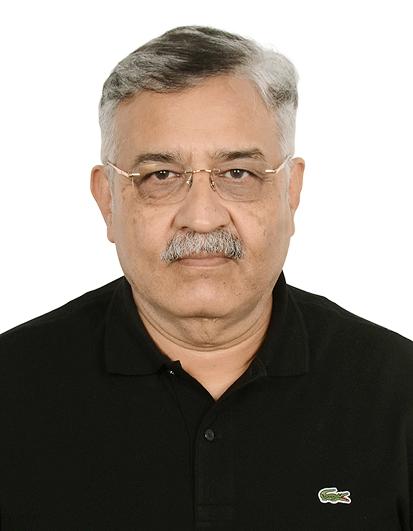
Managing Director
Delcom Telesystems
CISO Forum: How is the convergence of IT and OT (operational technology) reshaping security architecture for power transmission and distribution networks in India?
Ravindra Singh: IT and OT used to be two separate worlds in the power sector – one ran the business side, the other kept the grid running. That is changing fast. With smart grids, digital substations, IoT devices, and AI-enabled grid management coming in, these two environments are now tightly linked, and the line between them is blurring.
The upside is a more efficient, data-driven grid. The downside is a much bigger attack surface – a weakness in an IT system can now have real consequences for grid operations, so cybersecurity cannot stay a purely IT responsibility anymore.
Because of this, security architecture is shifting toward Zero Trust principles, network segmentation, continuous monitoring, and OT-aware threat detection, all tied together under a single governance framework rather than managed separately. As India scales up smart grids and renewable integration, this convergence is not going away, so cybersecurity needs to be built into every layer of the IT-OT architecture from the start, not added on afterwards.
CISO Forum: What specific technologies are enabling real-time threat detection and asset monitoring across geographically dispersed substations and grid infrastructure?
Ravindra Singh: Monitoring assets across hundreds of geographically dispersed substations is not something a single tool can handle on its own – it takes a combination of technologies working together. SCADA, phasor measurement units (PMUs), industrial IoT sensors, edge computing, AI/ML analytics, OT-aware intrusion detection, SIEM/XDR systems, secure communication networks, and centralised Security Operations Centres each play a role, and it is really the integration between them that gives utilities continuous visibility, faster threat detection, and the ability to predict maintenance needs before something fails. That combined approach is what is making India’s evolving smart-grid infrastructure more resilient.
CISO Forum: How are AI and video analytics being integrated into IP surveillance systems to move utilities from reactive monitoring to predictive threat identification?
Ravindra Singh: AI and video analytics have really changed what IP surveillance can do. It used to be mostly about recording footage for later – useful after something already went wrong, not before. Now, AI-enabled systems can monitor dozens or hundreds of camera feeds at once, detect unusual behaviour, flag potential intrusion patterns, and send alerts before an incident escalates.
Add in computer vision, deep learning, behavioural analytics, thermal imaging, and drone detection, and utilities can start correlating what is happening physically on-site with cyber and operational data, and respond much sooner. That shift – from reacting after the fact to catching problems early – is becoming central to how secure, resilient power transmission and distribution networks are being built.
CISO Forum: As utilities digitise legacy infrastructure, what are the biggest cybersecurity vulnerabilities emerging at the IT-OT interface, and how can they be mitigated?
Ravindra Singh: The IT-OT interface is probably the most sensitive boundary in a modern utility right now. As legacy systems get digitised and connected to enterprise networks, new risks emerge – more connectivity points, ageing equipment never built with security in mind, insecure industrial protocols, supply chain exposure, and far more remote access than before.
There is no single fix for this. It takes a layered approach: Zero Trust principles, robust network segmentation, OT-aware monitoring, secure remote access, AI-driven anomaly detection, and disciplined governance. The goal is to build cybersecurity into every stage of digital transformation, rather than treating it as something to patch in once the infrastructure is already live.
CISO Forum: What role does edge computing play in surveillance and monitoring systems deployed at remote or critical power infrastructure sites with limited connectivity?
Ravindra Singh: At remote or critical sites where connectivity is patchy at best, edge computing basically becomes the intelligence layer sitting between field devices and the central control system. It enables local AI-driven video analytics, real-time threat detection, predictive asset monitoring, and secure data processing, keeping systems running even when the network connection drops, including autonomous operation during outages.
For utilities managing hundreds of unmanned substations across wide geographic areas, this shifts surveillance from passive observation to more active security and operational management. It is a foundational piece for building a digital grid that remains secure and reliable, aside from connectivity issues.
CISO Forum: How are utilities balancing the need for centralised command-and-control visibility with the operational autonomy required at individual substations and transmission sites?
Ravindra Singh: Most utilities are moving toward a hybrid, distributed intelligence architecture – centralised visibility combined with local autonomy at each site. The central control centre handles enterprise-wide oversight, cybersecurity coordination, and strategic decisions, while individual substations, equipped with edge computing, AI, and intelligent protection devices, can act autonomously during local incidents.
This balance matters because it improves grid reliability, reduces dependence on constant communication links, and strengthens cyber resilience – while still allowing utilities to manage a large, geographically dispersed network without losing central control.
CISO Forum: With SCADA systems and industrial control networks increasingly connected to broader IT infrastructure, what specific safeguards are essential to prevent lateral movement of cyber threats?
Ravindra Singh: Stopping lateral movement between IT and OT really comes down to defence-in-depth – no single safeguard is enough on its own. Utilities need to combine strict network segmentation, Zero Trust principles, industrial DMZs, multi-factor authentication, privileged access management, secure remote access, OT-aware intrusion detection, SIEM integration, endpoint protection, application whitelisting, and continuous monitoring.
When these work together, they significantly cut the risk of a breach in enterprise IT spreading into operational systems – which is critical for keeping power infrastructure safe and reliable.
A typical architecture looks like this:
Internet
│
Enterprise IT Network
│
Enterprise Firewall
│
Demilitarised Zone (DMZ)
│
Industrial Firewall
│
SCADA Control Network
│
Substation LAN
│
IEDs • PLCs • RTUs • Protection Relays
Each network zone should only allow traffic that is explicitly authorised – nothing more.
CISO Forum: What technology standards or interoperability challenges do utilities face when integrating surveillance systems from multiple vendors across brownfield infrastructure?
Ravindra Singh: The biggest challenge with integrating surveillance across brownfield infrastructure is getting everything to work together without weakening reliability or security. Utilities often deal with a mix of legacy analogue equipment, proprietary IP devices, various video management platforms, and industrial control systems, all of which need to be governed by a unified security posture.
Open standards – ONVIF, IEC 61850, OPC UA, IEC 62443, and IEC 62351 – help a lot here, along with enterprise integration platforms, edge computing, consistent cybersecurity practices, and careful lifecycle planning. A standards-based approach is what enables utilities to build vendor-neutral surveillance ecosystems that can grow alongside future digital transformation.
On a recent project of similar scale that we handled, migrating the database from one VMS platform to another turned out to be one of the toughest parts of the implementation.
CISO Forum: How is DelcomTelesystems approaching the design of infrastructure that can scale to support both current surveillance needs and future smart-grid requirements?
Ravindra Singh: At DelcomTelesystems, we design infrastructure with scalability, interoperability, and long-term grid modernisation in mind from the outset. As a system integrator focused on IP surveillance, networking, unified communications, and power-grid security, we have delivered surveillance infrastructure for more than 800 high-voltage substations, spanning 220 kV, 400 kV, 765 kV, and HVDC sites.
Our approach centres on solid network design, choosing the right hardware and software for the environment, and surveillance solutions that support both grid operations and security monitoring together. We do not publicly share the specifics of our smart-grid architecture, but our experience across IP surveillance, networking, and high-voltage substation environments consistently points toward a standards-based, scalable, and converged infrastructure model – one that helps utilities meet today’s surveillance and security needs while building a digital foundation for future smart-grid capabilities such as AI-enabled analytics, edge computing, IoT integration, and centralised operational visibility.
CISO Forum: Looking ahead, how do you see technologies like 5G, IoT sensors, and drone-based monitoring changing the way India secures its power transmission and distribution networks?
Ravindra Singh: Looking ahead, India’s power transmission and distribution networks are likely to move from being digitally connected to being genuinely autonomous over the next decade. Technologies like 5G, industrial IoT sensors, edge AI, drone-based monitoring, and digital twins will enable utilities to keep a constant eye on their assets, detect threats earlier, and respond with greater speed and precision.
The utilities that get the most out of this will not treat these as separate, isolated tools – they will fold them into one integrated, cyber-resilient smart-grid ecosystem that balances centralised visibility with distributed intelligence. That combination will really drive the reliability, security, and sustainability of India’s critical power infrastructure going forward.
Conclusion
Ultimately, how well India modernises its power transmission and distribution networks will depend on how effectively utilities integrate cybersecurity, surveillance intelligence, edge computing, interoperability, and scalable digital infrastructure into a coherent operating model. As IT and OT continue to converge, a resilient grid will need to balance centralised visibility with local autonomy, proactive threat detection with disciplined governance, and today’s operational security needs with tomorrow’s smart-grid capabilities. Utilities that commit to standards-based, cyber-resilient, and scalable infrastructure now will be the ones best positioned for the next phase of digital transformation.