
Deloitte’s Gaurav Shukla says OT security must be treated as national economic resilience, with recoverability, not compliance, as the true benchmark.
India’s growth story is no longer written in code alone. It is being built in power grids, pipelines, ports, plants and mines. As these assets connect to enterprise networks, cloud platforms and remote-maintenance systems, the old air gap that once protected them has all but disappeared. For Gaurav Shukla, Partner and Leader, Cyber, Deloitte South Asia, that shift demands a rethink: a Viksit Bharat must also be a Cyber Surakshit Bharat.
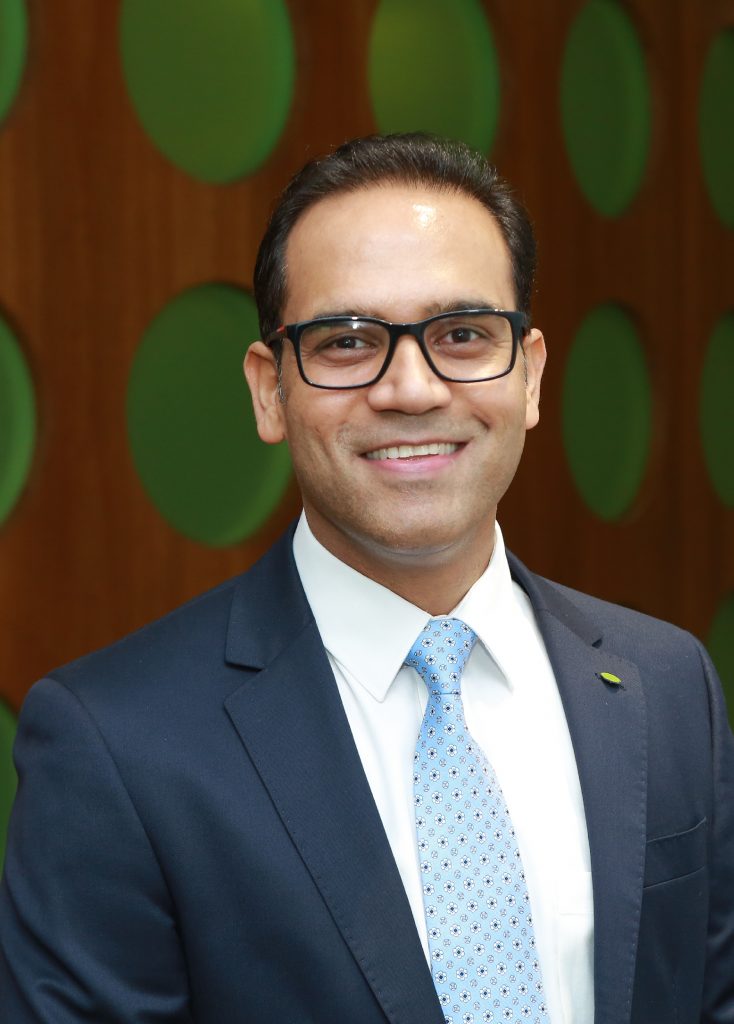
In this conversation with CISO Forum, Shukla argues that operational technology security is a national economic priority, not a plant-level IT concern. He explains why boards should measure maturity by the speed and confidence of recovery rather than by the number of controls deployed, what evolving CEA regulations will demand of utilities, and how to govern vendor access when patching is rarely possible. He also considers what AI can realistically offer OT security teams and lays out three actions leaders should take in the next twelve months.
CISO Forum: India’s growth ambitions now rest on plants, grids, pipelines, and ports as much as on software. What role does OT cybersecurity play in building a Viksit Bharat, and why should operational resilience be treated as a national economic priority rather than a plant-level IT concern?
Gaurav Shukla: A Viksit Bharat must also be a Cyber Surakshit Bharat. As India modernises its power systems, manufacturing plants, ports, pipelines and mobility networks, economic growth increasingly depends on the resilience of connected operational infrastructure.
The conversation around OT cybersecurity must therefore move beyond technology. An OT incident does not merely expose data; it can disrupt power, halt production, damage critical assets, affect safety and create cascading effects across sectors. Deloitte’s India OT research highlights how industrial digitalisation is expanding the attack surface as previously isolated assets connect with enterprise networks, cloud environments, analytics platforms and remote-maintenance systems.
The real challenge is not connectivity. India’s infrastructure will continue to become more connected, autonomous and data-driven. The challenge is ensuring that resilience is engineered into this transformation from the outset. Organisations should treat OT security as a strategic resilience capability rather than a compliance requirement to support India’s long-term growth ambitions.
“The future competitiveness of nations will depend not only on digital capability, but also on the resilience of the physical systems that power their economies.”
CISO Forum: OT security is a priority across power, oil and gas, manufacturing, metals and mining, infrastructure, ER&I and automotive. Where do you see the widest gap between sector investment and actual exposure?
Gaurav Shukla: The biggest gap today is not just between organisations that invest in cybersecurity and those that do not. It is also about cybersecurity spending and measurable operational resilience.
Many organisations have deployed segmentation technologies, OT firewalls and monitoring platforms, yet continue to struggle with fundamental issues such as asset visibility, ownership of OT risk and recovery readiness.
The Deloitte Global Future of Cyber Survey found that 85 per cent of organisations express confidence in their cyber strategy, while readiness trails confidence by nearly 15 percentage points.
The most resilient organisations are not necessarily those with the most tools. They are the ones that can rapidly identify critical assets, control access, contain incidents and restore operations safely.
Boards should stop measuring cybersecurity maturity by the number of controls deployed and start measuring it by the speed and confidence of recovery and resilience.
CISO Forum: The sectors do not share the same risk profile. What does “OT security priority” mean in practice for a power utility, an oil and gas operator and a metals and mining company, and where does a one-size-fits-all approach fail?
Gaurav Shukla: While the principles of OT security are universal, priorities differ based on operational consequences. For a power utility, the focus is on grid reliability, system stability, and uninterrupted service, requiring resilient control systems, secure communications, and strong segmentation. For an oil and gas operator, OT security is inseparable from process safety and environmental protection, with emphasis on safeguarding control and safety systems while ensuring safe shutdown and recovery. For a metals and mining company, the priority is maintaining safe operations in environments where equipment, automation and autonomous assets cannot be stopped without significant operational and safety impacts.
A one-size-fits-all approach fails when controls are applied without considering physical consequences. Effective OT security combines a common governance framework with sector-specific risk engineering aligned to safety, reliability and operational realities.
“OT security is not defined by the technology being protected, but by the consequences of its failure.”
CISO Forum: The recent announcement on the power sector and the evolving CEA cybersecurity regulations are raising the compliance bar for utilities and the wider energy ecosystem. What will change on the ground, and what are the most common mistakes you expect in the first year of implementation?
Gaurav Shukla: The evolving Central Electricity Authority cybersecurity framework marks a significant shift from policy-driven compliance to operational accountability. Utilities will increasingly be expected to demonstrate not just the presence of controls, but their effectiveness across interconnected IT and OT environments.
As organisations begin implementation, one of the most common mistakes will be treating compliance as a documentation exercise. Organisations that focus solely on policies and audits are unlikely to achieve the resilience outcomes regulators expect.
The priority should be clear: identify and protect critical assets, establish trust boundaries, govern remote access, and regularly validate recovery capabilities. Organisations should view compliance as a catalyst for resilience, not an end goal.
Regulators are no longer asking organisations if cybersecurity controls have been implemented. They are increasingly asking whether those controls will stand up during a real-world disruption.
CISO Forum: As regulation tightens, companies risk treating OT security as an audit exercise. How can boards and CISOs distinguish compliance from genuine resilience when a plant or grid is under attack?
Compliance establishes the baseline. Resilience determines operational survival. The most important boardroom question is no longer, ‘Are we secure?’ It is, ‘How confidently can we continue operating when something goes wrong?’ Forward-looking organisations are moving beyond audits and tabletop exercises toward testing recovery capabilities, safe shutdown procedures, and manual operations, as well as coordinated decision-making across engineering, operations, cyber, and leadership teams.
“Cyber resilience is demonstrated through performance under pressure, not through policy documents.”
CISO Forum: IT-OT convergence has delivered efficiency and real-time visibility, but it has also removed the air gap many plants once relied on. What are the most common ways attackers are crossing from IT into OT environments in India today, and which architectural controls make the biggest difference?
The disappearance of the traditional air gap has fundamentally changed industrial risk. Business systems, remote maintenance platforms, cloud analytics and third-party connectivity have created significant operational value, while also expanding the attack surface. Organisations should focus first on visibility and trust boundaries. They must understand which assets are connected, who can access them, and the purpose of those connections. Strong IT-OT segmentation, industrial DMZs, controlled remote access and continuous monitoring remain among the highest-return investments in industrial cybersecurity.
“In OT environments, visibility is not a cybersecurity capability. It is the foundation of every other cybersecurity capability.”
CISO Forum: Industrial environments depend on a long chain of OEMs, integrators, maintenance vendors, and remote-access providers. How should organisations manage third-party and supply chain risk in OT, where vendors often have persistent access and patching is slow or impossible?
Gaurav Shukla: Third-party risk in OT should be treated as an extension of the operational environment, rather than a procurement or compliance exercise. Organisations must first establish visibility into which OEMs, integrators, maintenance vendors and remote-support providers can access critical systems, modify configurations or influence operational processes.
Wherever possible, persistent vendor access should be replaced with approved, time-bound and monitored access, supported by multifactor authentication, privileged access controls and plant-level authorisation. Given that patching is often constrained by operational requirements, organisations should strengthen compensating controls such as segmentation, application allowlisting, protocol filtering and continuous monitoring.
Ultimately, resilience depends on ensuring that every critical supplier relationship is visible, governed and recoverable. The goal is not to eliminate dependency on vendors, but to prevent trusted access from becoming an uncontrolled pathway into critical operations.
“In OT, third-party access is often necessary. Unmanaged third-party access is where risk becomes operational.”
CISO Forum: AI-augmented SOCs are being positioned as the answer to talent shortages and alert fatigue. What can AI realistically do in an OT environment where telemetry is inconsistent, protocols are proprietary, automated response could halt production, and humans must stay firmly in the loop?
AI will be an important force multiplier for OT security operations, but it is unlikely to replace human operational decision-making. Its greatest value lies in reducing analyst workload, correlating complex signals and helping teams build operational context faster. However, AI cannot compensate for poor visibility, incomplete asset inventories or weak operational processes. In industrial environments, automated decisions that affect physical processes must be approached cautiously. Organisations should keep humans firmly in the loop. The future of OT security is human-led and AI-augmented.
CISO Forum: Looking ahead, which emerging threats concern you most for critical infrastructure, from AI-accelerated exploitation and ransomware aimed at operations to quantum risk and connected, AI-enabled vehicles? What should leaders prepare for now?
Gaurav Shukla: The greatest concern is not any single technology. It is the convergence of AI, connectivity, and autonomy that is accelerating cyber risk across critical infrastructure. AI is already enabling faster reconnaissance, vulnerability discovery and more convincing social-engineering attacks, compressing the time available for defence. At the same time, ransomware groups are increasingly targeting operational environments where disruption creates greater leverage than data theft.
Supply chain compromise remains a significant threat as organisations become more dependent on software, firmware, and remote service providers. Looking ahead, connected and AI-enabled vehicles will further blur the boundaries between cyber and physical risk, while quantum computing reinforces the need for long-term cryptographic planning.
Leaders should focus less on predicting the next threat and more on building the capability to anticipate, withstand and rapidly recover from disruption.
“The future challenge is not managing individual technologies. It is managing the convergence of cyber, physical and autonomous risk.”
CISO Forum: If a CISO or plant head at a critical infrastructure organisation could take only three actions in the next 12 months to strengthen cyber resilience, what should they be, and how can they secure budget and board backing for them?
Gaurav Shukla: For CISOs and plant heads, three priorities can significantly strengthen cyber resilience over the next 12 months: First, establish complete visibility of critical OT assets and operational dependencies. You cannot protect or recover what you do not understand. Second, reduce the most significant pathways of compromise. Focus on IT-OT segmentation, privileged access, vendor connectivity and remote-access governance. Third, prove recoverability. Run realistic cyber-physical exercises and validate that critical operations can be safely isolated, restored, and restarted.
To secure board support, translate cyber risk into operational and financial impact. Boards respond to production loss, safety exposure, recovery timelines, and regulatory consequences far more readily than to vulnerability metrics.
“Cyber resilience is not the cost of industrial transformation. It is the condition that makes industrial transformation possible.


