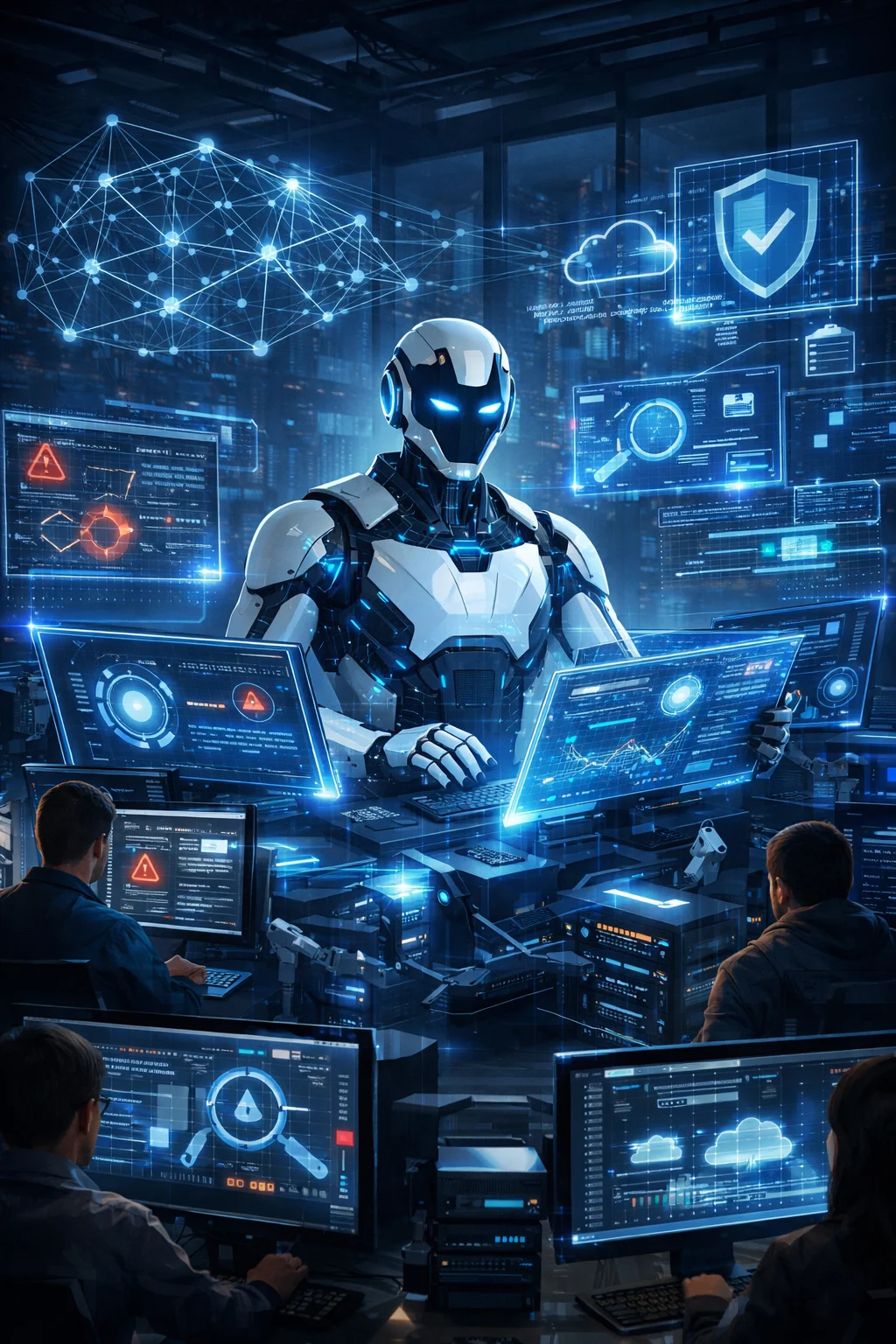
Unlike traditional applications, enterprise AI operates through interconnected components models, agents, identities, prompts, data flows, and tools interacting dynamically across internal infrastructure and external services.

Founder- Aquila I
A single AI workflow can invoke external AI services, access internal APIs, retrieve sensitive enterprise data, and trigger automated actions across multiple systems often within seconds and under a single service identity.
This creates an attack surface that cannot be understood through isolated security signals.
Effective protection requires visibility across the entire AI execution path from prompts and agents to identities, tools, and data interactions.
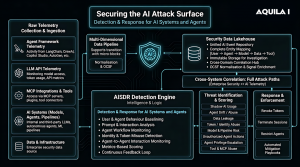
The architecture shown here illustrates how Aquila I AISDR (AI Systems Detection & Response) addresses this challenge:
• Ingesting telemetry across AI frameworks, LLM APIs, agents, MCP integrations, and infrastructure.
• Normalizing and correlating AI activity within Aquila I data lakehouse purpose built for cyber security.
• Correlating enterprise AI telemetry with enterprise security telemetry to build a unified security view.
• Analyzing agent behavior, workflows, and identity usage.
• Identifying risks such as MCP Abuse, agent drift, unauthorized Agent actions, Sensitive data leakage and token misuse.
• Enabling automated response and enforcement.
By correlating the full chain –prompt → agent → tool → data– Aquila I AISDR surfaces complete AI attack paths rather than isolated alerts.
As organizations accelerate AI adoption, security visibility must evolve to match the complexity of these systems.
–Authored by Hakimuddin Wadlawala Founder- Aquila I